















A lot of people want to understand ifsp goals examples but don’t know where to begin. Consider this article your starting point — and a reliable one at that.
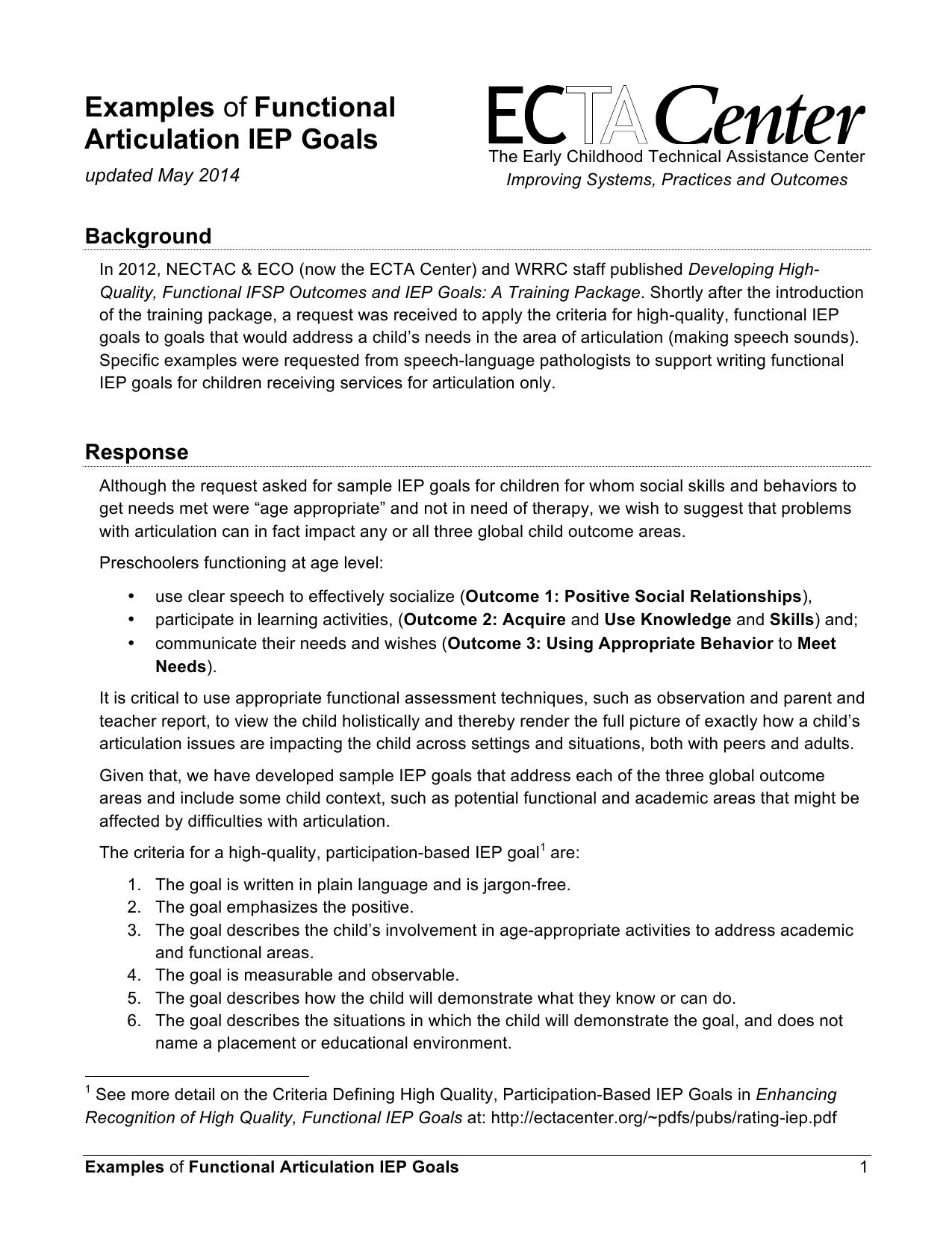
Writing functional ifsp outcomes • “(the child) will participate in (the routines/times of day), by _____ing”.
Experts who study ifsp goals examples often emphasize a few recurring themes. These themes aren’t arbitrary — they emerge because they consistently matter across different contexts, audiences, and use cases involving ifsp goals examples.
The data and evidence surrounding ifsp goals examples paint a picture that’s worth taking seriously. Informed decisions about ifsp goals examples tend to lead to better outcomes than decisions made on gut feeling alone.
Experts and experienced practitioners tend to emphasize these points when discussing ifsp goals examples:
- Stay current — ifsp goals examples is a topic that evolves, and outdated information can lead you astray.
- Pay attention to the details — in ifsp goals examples, small things often have a bigger impact than they seem.
- Look for patterns in how ifsp goals examples plays out across different situations.
- Use what you learn about ifsp goals examples in practical ways as soon as possible to reinforce your understanding.
- Consider the source of any information you receive about ifsp goals examples — credibility matters.
- Don’t be afraid to ask questions when something about ifsp goals examples isn’t clear.
The story of ifsp goals examples is still being written — by the people who engage with it, learn about it, and apply it in their lives. By reading this article, you’ve become a more informed participant in that story.